Creator vs Performance: What Entrepreneurs Can Learn from Quantum Physics About Leadership
Many CEO sand entrepreneurs operate in a constant state of performance orientation.Targets must be achieved, processes optimized, and results controlled. This mindset is necessary for running successful organizations, yet it often creates an unintended limitation: when leadership focuses exclusively on performance,the ability to recognize new opportunities declines.
In many companies, a recurring pattern emerges. Leadership teams invest increasing energy into control, reporting, and efficiency improvements. Despite this effort, real growth often stagnates. The issue is rarely a lack of competence, but rather a restricted way of perceiving opportunities.
The difference between Creator and Performance describes two fundamentally different ways of thinking, deciding, and shaping business reality.
The Performance Paradox of Modern Leadership
Performanceis essential. Without execution, there are no results. However, performance alone rarely creates transformation.
Many leaders operate in a continuous reactive mode. They solve problems, respond to market changes, and optimize existing systems. This approach is highly effective in stable environments with known challenges.
The difficulty arises when new growth opportunities need to be created.
For example, a managing director of a mid-sized company spent years optimizing internal processes. Productivity steadily increased, yet revenue remained flat. Only when the focus shifted from internal efficiency to external market opportunities did new business areas emerge.
This illustrates a key principle: performance improves what already exists, while growth often comes from creating something new.
Those who operate only in performance mode often become managers of existing structures. Those who think as creators become architects of future development.
Understanding Creator Mode and Performance Mode
Creator mode does not replace performance. Instead, it complements it by enablingleaders to think beyond existing limitations.
In Creator mode, attention shifts toward potential. Instead of asking why something does not work, the central question becomes: what opportunity are we currently missing?
This shift may appear subtle, but its impact is significant.
A leader facing a difficult personnel decision in performance mode will focus on risks,costs, and operational consequences. In Creator mode, the perspective expandsto include new organizational structures, alternative roles, and hidden talentpotential.
The quality of our results is directly determined by the quality of our perception.
This iswhere the difference between average and exceptional leadership often emerges.

What Quantum Physics Teaches About Perception and Reality
Quantum physics is often misinterpreted in business contexts. However, it offers valuable conceptual metaphors for leadership thinking.
One of the most well-known concepts is the observer effect, which suggests that observation influences the state of a system.
For leaders, this does not imply that thoughts magically create reality. The deeper insight lies elsewhere.
Human beings never perceive complete reality. They perceive what their attention is directed toward.
A CEO focused exclusively on risks will primarily notice risks. An entrepreneur actively searching for opportunities will more frequently identify potential for growth.
In practice, this mechanism influences daily decision-making. Teams adapt to the questions their leaders ask. Organizational culture evolves based on what leadership consistently focuses on.
Those who constantly ask “What could go wrong?” receive very different answers than those who ask “What opportunity is hidden in this situation?”
Quantum physics therefore provides not a management method, but a powerful mental model: observation shapes perception, and perception shapes decisions.
How Leaders Transition from Reacting to Creating
The shift from Performance to Creator mode does not begin with new tools but with a change in mindset.
Many executives are deeply embedded in operational demands, leaving little space forstrategic thinking. Calendars are filled with meetings, and decisions are often made under time pressure.
In practice, several approaches have proven effective. Leaders deliberately create protected time blocks for strategic thinking without operational distractions. They translate problems into opportunity-based questions. They make decisions not only based on historical data but also on future scenarios. And they regularly engage external sparring partners to broaden perspective.
One technology executive introduced two hours of dedicated Creator time each week. During this period, no operational topics were discussed. Instead, the focus was entirely on future opportunities and strategic development. Within a few months, multiple innovation projects emerged.
The keyfactor is not the method itself, but the conscious interruption of habitual thjinking patterns.
Executive Coaching as a Bridge Between Creator and Performance
As responsibility increases, honest feedback becomes rarer while the consequences of decisions grow significantly. This is where executive coaching becomes particularly valuable.
Executive coaching provides a structured space for reflection, clarity, and strategic development.
Its purpose is not to reduce performance but to enhance the ability to switch flexibly between both modes.
Effective coaching helps leaders identify blind spots, develop new perspectives, improvedecision quality, and increase personal impact. The most successful executives are not permanently in Creator mode or Performance mode. They move fluidly between both states depending on the situation.
This flexibility becomes a critical competitive advantage in increasingly complex business environments.
Conclusion: The Future Is Not Controlled, It Is Created
Performance remains an essential element of leadership. However, sustainable growth rarely results from optimization alone. Entrepreneurs and executives benefit fromconsciously shifting their attention toward possibilities, potential, and future-oriented thinking. Creator mode expands decision space, enables innovation, and strengthens strategic clarity. Executive coaching helps integrate both modes into a coherent leadership approach.
About Julie Sternberg
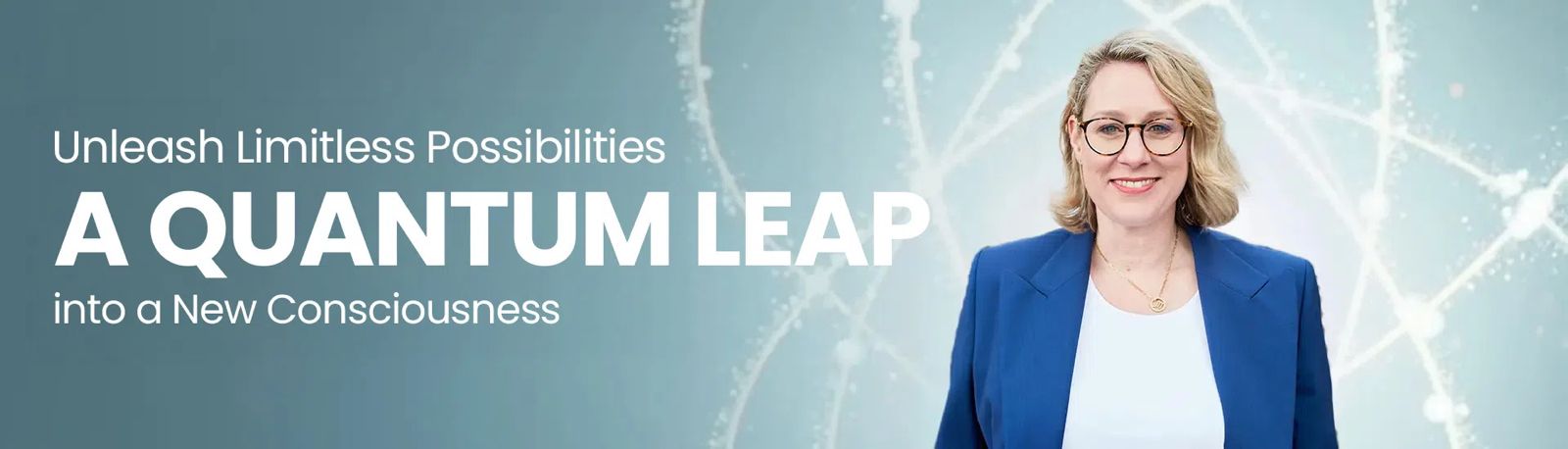
Quantum entrepreneur and pioneer of Quantum Leadership in the DACH region.
After 14 years of traditional leadership in the pharmaceutical industry, I discovered the quantum field as a revolutionary new dimension of leadership. Today, I teach leaders around the world how to apply quantum principles in practice.