Key Takeaways:
Innovation needs space: Organizations develop better solutions when multiple options are considered simultaneously.
Superposition as a leadership principle: Quantum Leadership uses thinking in possibilities before committing to a decision.
Collapse creates execution power: Only conscious decision-making transforms potential into measurable results.
Leadership in complexity: CEOs benefit from using uncertainty as a driver of innovation.
New leadership logic: Future-ready leadership combines openness, clarity, and consistent execution.
Why Innovation Often Fails in Traditional Leadership Models
Many organizations try to force innovation through processes, KPIs, and rapid decision-making. However, this pressure often leads to creative options being eliminated too early.
Traditional leadership works well in stable environments. In dynamic markets, however, a key problem arises: complexity is reduced before it is truly understood, causing valuable potential to be lost.
Quantum Leadership expands this perspective. Instead of immediately evaluating ideas, leaders first observe, think, and explore consciously.
Innovation is not created by the fastest decision, but by the quality of the tension between possibility and clarity.
Superposition: The Space of Simultaneous Possibilities
The concept of superposition describes a state in which multiple possibilities exist at the same time.
In a leadership context, this means leaders consciously hold multiple solutions, scenarios, and perspectives open before committing.
This creates three key advantages:
- Higher decision quality through broader perspectives
- Increased creativity within teams due to open thinking space
- Fewer wrong decisions caused by premature fixation
Practical Example
A mid-sized company is developing a new digital platform. Instead of finalizing one concept immediately, the leadership team develops three parallel scenarios: a service model, a data-driven platform model, and a hybrid approach. Only after market validation is a final decision made. The result is a significantly more robust innovation strategy.
Collapse: The Moment of Clear Decision-Making
Collapse describes the transition from multiple possibilities into one concrete decision.
Without this step, innovation remains theoretical. Only decision-making transforms potential into execution, responsibility, and impact.
Quantum Leadership Mastery therefore does not mean endless indecision, but conscious timing.
The key question is not whether to decide, but when.

Innovation Emerges Between Openness and Focus
The biggest challenge in modern leadership is balancing two apparent opposites: openness and decisiveness.
Too much openness leads to lack of direction. Too much focus leads to loss of innovation.
Quantum Leadership creates a conscious transition space between these states.
Common Mistakes in Organizations
- Decisions are made before alternatives are fully understood
- Teams are aligned too early on a single solution
- Innovation is confused with speed
Quantum Leadership in Business Practice
CEOs and executives applying this model often report three key changes:
First, the quality of strategic decisions improves significantly due to broader perspectives.
Second, the innovation culture strengthens as employees experience more psychological safety.
Third, operational pressure decreases because not every idea must be finalized immediately.
Leadership Quote & Conclusion
Those who decide too early limit possibilities. Those who decide too late lose impact. Leadership happens in the conscious timing between both.
Leadership Reflection Checklist
- Which options am I currently excluding too early?
- Where do I decide under pressure instead of clarity?
- Which perspectives are missing in my decision space?
- Where do I need more openness in thinking?
- When is the right moment for collapse?
Conclusion
In Quantum leadership Mastery, superposition and collapse are not theoretical constructs, but practical models of thought for modern corporate management. They help managers not only to demand innovation, but to enable it systematically. Companies that integrate this approach create a new balance of creativity, clarity and consistent implementation. For CEOs and executives, this creates a decisive advantage: better decisions in less time with greater impact.
About Julie Sternberg
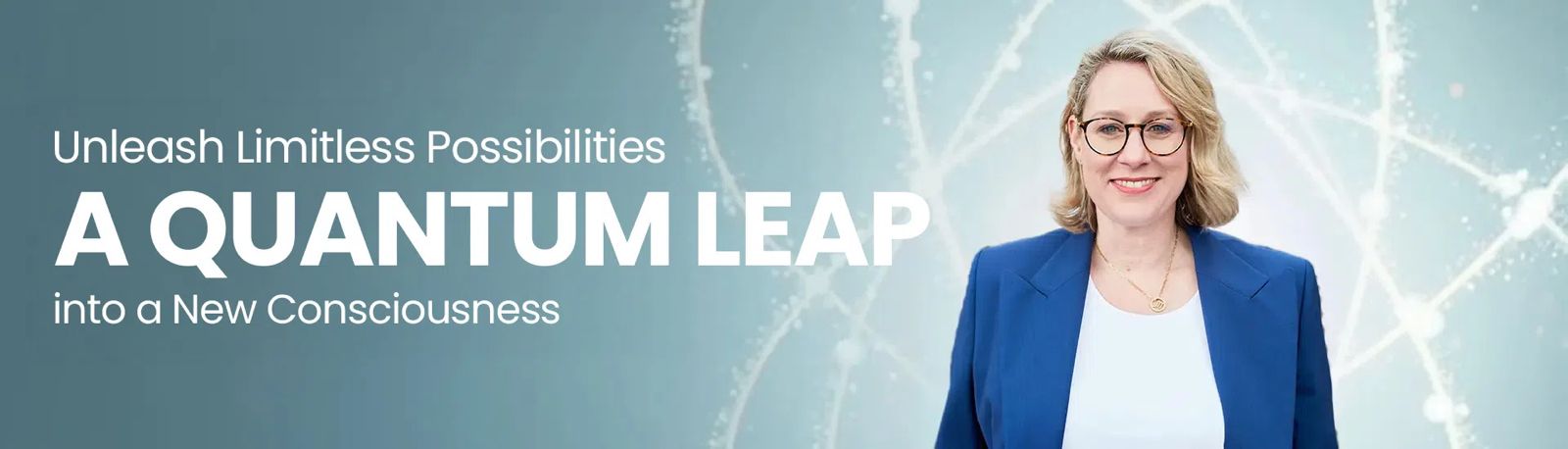
Quantum entrepreneur and pioneer of Quantum Leadership in the DACH region.
After 14 years of traditional leadership in the pharmaceutical industry, I discovered the quantum field as a revolutionary new dimension of leadership. Today, I teach leaders around the world how to apply quantum principles in practice.